

We are a generation defined by our screens. From the moment we check our phones in the morning to the long hours spent in front of corporate laptops, our daily lives are completely anchored in the digital ecosystem of blue lights. As urban professionals, we have learned to be highly disciplined about applying traditional sunscreen before stepping outdoors to block ultraviolet (UV) radiation. We understand that solar rays fracture our lipid barrier and cause premature aging.
However, a silent, indoor facing an entirely separate, invisible environmental hazard is glowing just inches from our faces for eight to ten hours every single day. It requires no sunlight to cause damage, and standard sunscreens leave us completely unprotected against it.
This hidden culprit is High-Energy Visible (HEV) light, commonly known as blue light skin damage. If your skin consistently feels texturized, looks exhausted by 4:00 PM, or is developing stubborn, uneven patches despite a minimalist lifestyle, you are likely experiencing the modern phenomenon of digital aging.
The Molecular Science: What is HEV Blue Light?
To effectively defend your fractured skin barrier, we must first understand the physics of light spectrums. High-Energy Visible (HEV) light sits immediately adjacent to ultraviolet radiation on the electromagnetic spectrum. It possesses short, high-energy wavelengths ranging between 400 and 500 nanometers.
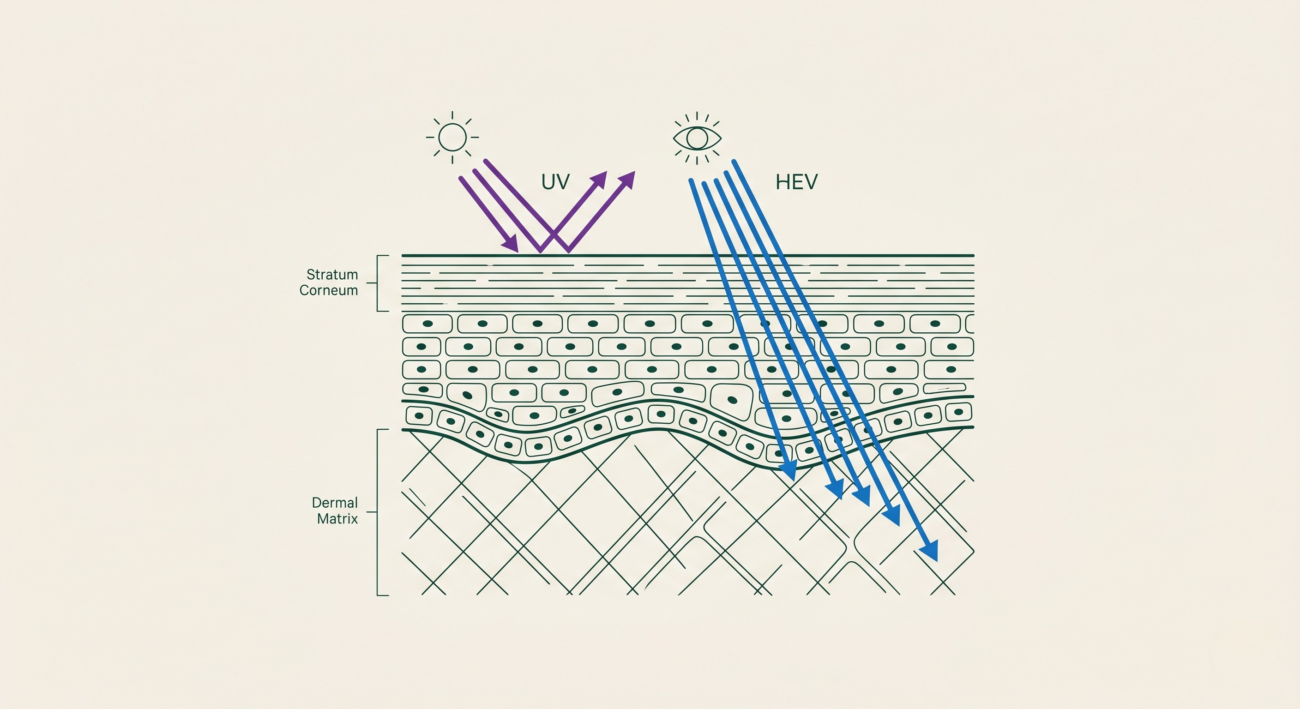
While UVA and UVB rays are undoubtedly powerful, they primarily damage the topmost layer of the skin (the epidermis). Blue light, however, behaves quite differently. Due to its specific wavelength structure, HEV light penetrates significantly deeper into the cutaneous tissue, passing straight through the epidermis to strike the deep dermal layers.
This is exactly where your skin’s foundational architecture lives: your collagen, elastin, and hyaluronic acid banks. When blue light penetrates this deeply, it doesn’t cause a traditional sunburn. Instead, it triggers a destructive cellular event known as Oxidative Stress.
How Blue Light Stimulates Free Radical Cascades
When HEV light hits the dermal layers, it excites molecules within your cells, causing them to generate an unstable rush of reactive oxygen species (ROS)—commonly referred to as free radicals.
Think of free radicals as molecular thieves. Because they are missing an electron, they violently crash into healthy skin cells to steal one. This microscopic chaos kicks off an aggressive chain reaction that breaks down your vital structural proteins:
- Collagen Degradation: Free radicals activate specific enzymes called Matrix Metalloproteinases (MMPs). These enzymes act like microscopic scissors, chopping up your healthy collagen fibers. This leads to a structural collapse, showing up on the surface as early fine lines and a loss of firm elasticity.
- Melanocyte Triggering: Research reveals that blue light induces significantly more long-lasting, stubborn hyperpigmentation than UV rays. It directly stimulates melanocytes (the skin’s pigment-producing cells), resulting in uneven patches, persistent dark spots, and a classic “dull screen fatigue” complexion.
- Mitochondrial Exhaustion: Continuous exposure to digital devices disrupts the cellular mitochondria—the powerhouses that supply energy for cellular repair and turnover. When mitochondrial energy drops, your natural cellular renewal stalls, leaving your skin looking visibly tired.
Recognizing the Subtle Symptoms of Digital Aging
Digital skin damage doesn’t happen overnight; it manifests as a slow, progressive decline in skin vitality. For the modern professional aged 25 and above, it typically presents through three distinct everyday indicators:
- The Afternoon Gray Out: Your skin looks bright and plump at 8:00 AM, but by the time you close your laptop late in the afternoon, your complexion appears dull, gray, and completely drained of its natural radiance.
- Stubborn Screen Pigmentation: You notice faint, localized shadows or flat brown spots developing across your cheeks and forehead—the exact zones that catch the direct reflection and glare of your monitor.
- Dehydration Fatigue: Even when you use rich hydrating ingredients, your skin texture feels rough and deflated under office lighting, as oxidative stress limits the skin’s natural moisture-retaining capabilities.
Constructing a Phyto-Shield: Beyond Traditional Sunscreen
The most critical realization of modern dermatology is that standard chemical UV filters are completely blind to the visible light spectrum. They are engineered to absorb ultraviolet wavelengths, meaning they let blue light pass straight through into your dermis completely unobstructed.
To stop free radical cascades and prevent digital aging, your skin does not need heavier filters. It requires a potent, highly concentrated antioxidant mesh that can actively donate electrons to free radicals, neutralizing them before they can damage your collagen banking system.
True environmental defense requires a deliberate intersection of botanical resilience and clinical biotechnology.
1. Phyto-Antioxidants as Digital Shields
Plants that thrive under intense environmental exposure develop highly advanced molecular defense networks. raw botanical resilience—specifically Blue Lotus Flower Extract—acts as a natural phyo-shield stands out as a prime example of this natural resilience. Packed with concentrated flavonoids and specialized phytosterols, this pure botanical active operates as an internal digital shield. When applied topically, it systematically intercepts free radicals generated by your laptop and phone screens, safely de-activating them before they can fracture your structural lipid proteins.
2. Biomimetic Signaling for Cellular Repair
While antioxidants protect your skin from future screen exposure, your existing cells require structural assistance to recover from historical damage. This is where Biomimetic Peptides become absolutely vital. Peptides are short chains of amino acids that act as precise cellular messengers. When your natural collagen is fragmented by HEV light, these smart peptides signal your fibroblasts to accelerate the production of fresh, healthy collagen and elastin proteins, effectively rebuilding a fractured barrier from the inside out.
The Reset: A Climate-Smart Approach to Screen Defense
Protecting your skin in the digital age does not mean reducing your screen time or shifting your professional habits. It simply requires evolving your skincare philosophy to match your daily indoor environment. Heavy, occlusive creams often suffocate urban skin under artificial air conditioning. Instead, look for a lightweight, highly bio-available serum that layers seamlessly under your daily routine.
By delivering concentrated antioxidants like Blue Lotus Flower Extract alongside structural signaling peptides deep into the skin, you create an invisible, weightless shield against your workspace environment.
Do not let your screen dictate the biological age of your skin. Transition to an intentional, climate-smart routine that bridges raw botanical power with advanced clinical science, and keep your skin as resilient as your ambition.
🛒 The Strategic Call-To-Action (CTA)
Defend Your Skin Matrix From Digital Fatigue.
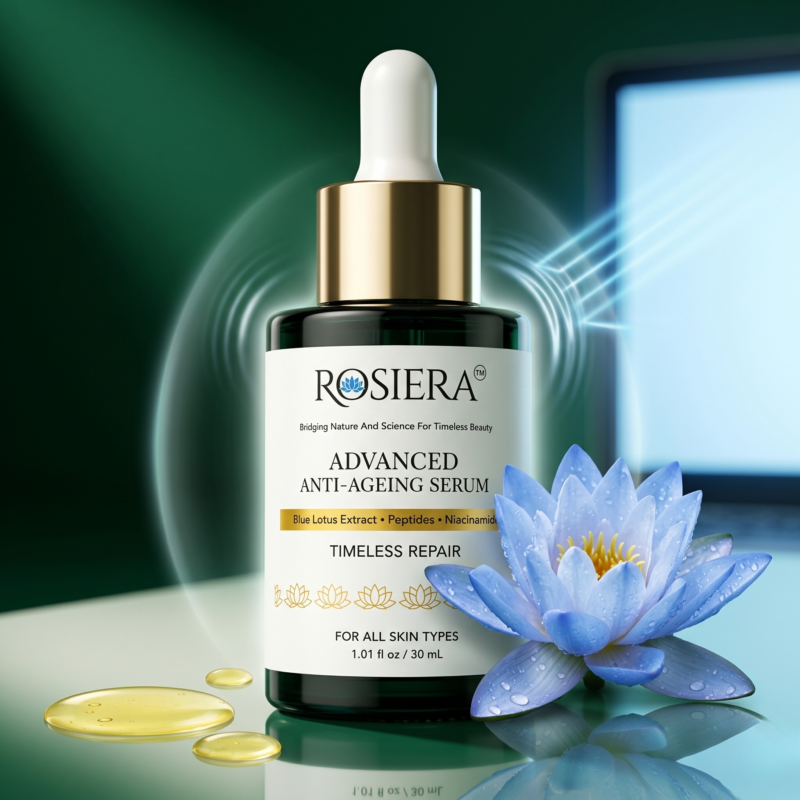
Engineered precisely for the daily realities of the modern urban professional, the Rosiera Timeless Repair Serum combines the raw, free-radical neutralizing power of Blue Lotus Flower Extract with advanced Biomimetic Peptides. It forms a weightless, highly potent antioxidant shield that blocks screen-induced oxidative stress while structurally repairing your deep collagen architecture.
🔬 Dermatologically Tested | Climate-Smart Formulation 👉 Experience the New Era of Skin Intentionality – Shop the Serum Now