

Niacinamide skin benefits and usage have made this multi-tasking molecule a staple in high-performance skincare. If you scan the ingredient labels of modern formulations, one multi-tasking molecule dominates shelf space: Niacinamide
But what actually is it? How is it sourced, are higher percentages always better, and what myths are costing your skin its health? Let’s dive deep into the science of niacinamide skin benefits and usage.
What Is Niacinamide and Where Does It Come From?
Niacinamide is biologically known as Nicotinamide, a water-soluble, highly stable derivative of Vitamin B3 (niacin). Exploring Vitamin B3 skincare benefits reveals why this molecule is essential…
Unlike botanical oils that are physically pressed from plants, pure cosmetic-grade niacinamide is synthesized through precision green chemistry via the catalytic oxidation of 3-methylpyridine. While you cannot extract pure niacinamide directly from a plant leaf into a skincare bottle, your body naturally obtains Vitamin B3 from dietary sources like whole grains, poultry, fish, mushrooms, and green leafy vegetables. Topically, however, laboratory-synthesized, bio-identical niacinamide is required to ensure absolute molecular purity, stability, and precise dermal penetration without causing systemic reactions.
Why Niacinamide Skin Benefits and Usage Crowned It the Ultimate Skincare Hero
Niacinamide earned its crown as a universal “hero” ingredient because it doesn’t just treat a single symptom—it acts as a cellular coordinator across multiple skin layers, making it essential for city skin prone to midday pore congestion and sebum control without stripping natural oils.
- Ceramide Biosynthesis: It actively stimulates the skin to synthesize its own natural ceramides and free fatty acids, reinforcing the lipid barrier.
- Sebum and Pore Regulation: It balances oil production without stripping moisture, making pore congestion and sebum control effortless for city skin prone to enlarged pores.
- Anti-Inflammatory Action: It calms redness, UV-induced inflammation, and irritation caused by urban particulate matter (PM2.5).
- Melanin Regulation: It interrupts the pathway of pigment transfer to surface skin cells, safely fading dark spots and brightening uneven tone.
Decoding Percentages: How Niacinamide Concentrations Impact Skin Health
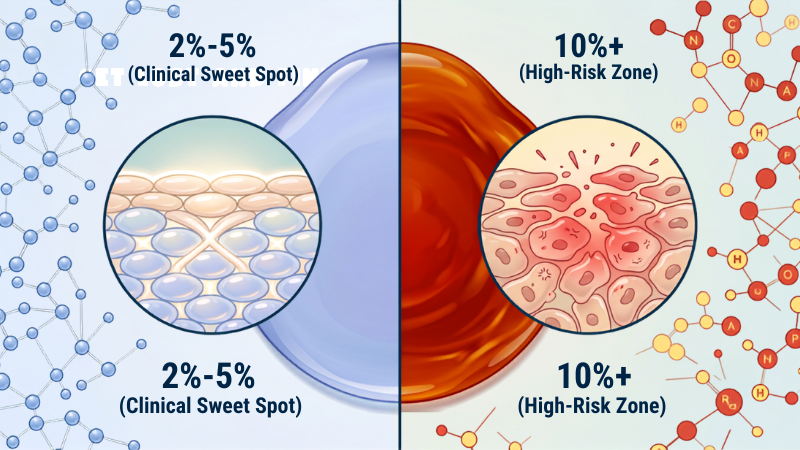
A major trap in modern beauty marketing is the “more is better” fallacy, with brands racing to launch 10%, 15%, or 20% niacinamide serums. Understanding how concentrations actually function changes everything:
- 2% to 5% (The Clinical Sweet Spot): Backed by decades of dermatological research, 2% to 5% concentrations represent the ideal clinical sweet spot skincare concentration for maximum efficacy.
- 10% and Above (The High-Risk Zone): While some resilient skin types tolerate higher doses, concentrations above 10% frequently trigger severe stinging, cellular flushing, and contact dermatitis—especially for those with sensitive skin or compromised barriers.
Market Myths vs. Dermatological Reality
- Myth 1: “Higher percentages give faster, better anti-aging results.”
- Reality: Clinical data shows that a well-formulated 5% concentration performs identically or better in long-term barrier repair compared to aggressive 10%+ doses, minus the inflammation.
- Myth 2: “You can’t mix niacinamide with other active vitamins.”
- Reality: This is an outdated myth based on old 1960s formulation tests. Modern stabilized formulas allow niacinamide to work harmoniously alongside other skin-transforming actives.
- Understanding how to properly incorporate these active formulations into your daily regimen is the key to achieving long-term skin health, lasting hydration, and resilient urban pollution skin barrier protection.
What’s Next?
Incorporating these balanced formulations into your daily regimen is the ultimate key to achieving long-term skin health, lasting hydration, and resilient urban pollution skin barrier protection. By understanding the true science of concentrations rather than falling for marketing hype, your complexion stays calm, clear, and fortified against modern environmental stressors. Stay tuned for Part 2 as we explore advanced synergies.