

If you peek into any mainstream skincare aisle, you will see shelves packed with promises: However, for urban skin, collagen preservation is far more critical than surface boosting.
For decades, the beauty industry has taught us that aging skin is simply a shortage of collagen, and the fix is to slather more of it on.
But if you are over 25 and living in an urban environment, this approach is fundamentally missing the mark. Collagen preservation is far more critical than collagen boosting.
Understanding why your skin’s structural scaffolding breaks down reveals why protecting what you already have is the real secret to long-term urban skin aging defense.
The Great Collagen Myth: Can You Topically Replace What You Lose?
To understand why preservation beats boosting, we have to look at basic skin biology. Collagen is a massive, complex structural protein produced deep within the dermal layer by cells called fibroblasts.
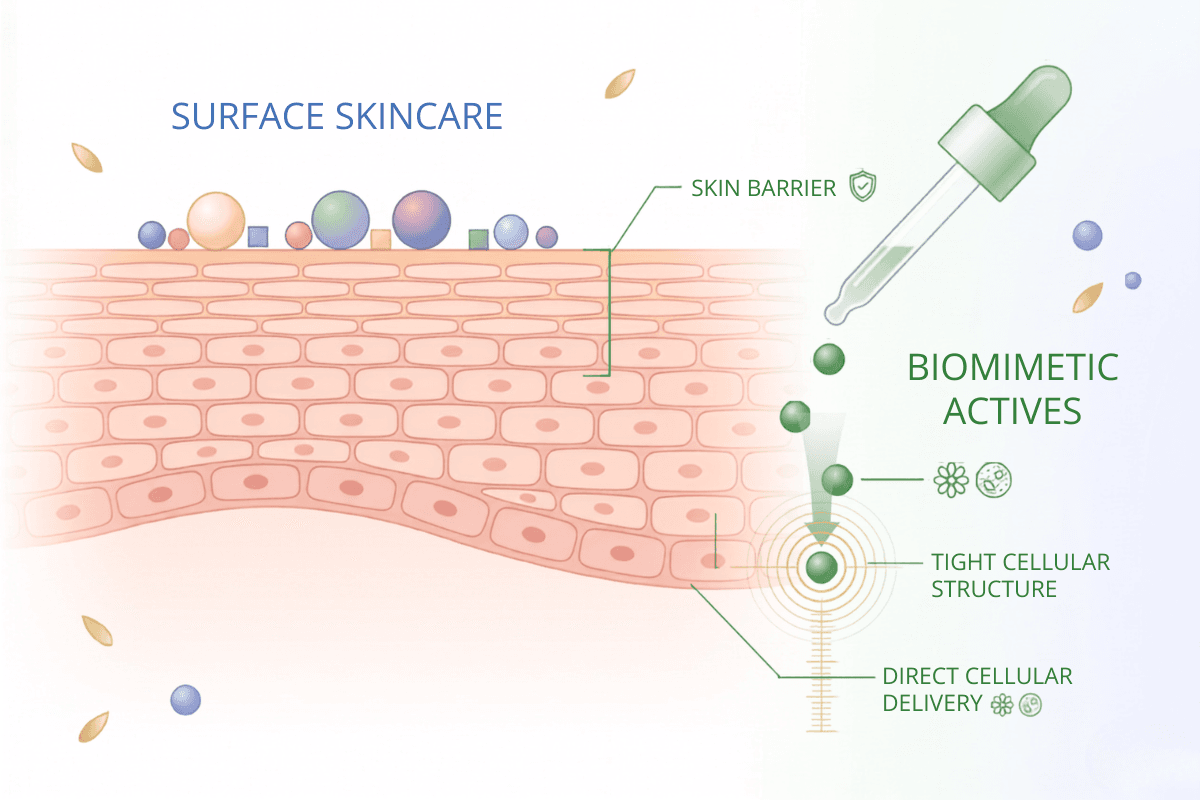
When skincare brands market topical “collagen” products, there is a fundamental scientific hurdle: molecule size.
- The Size Barrier: Intact collagen molecules are far too large to pass through the stratum corneum—your skin’s protective outer defense.
- Surface Hydration vs. Dermal Synthesis: When you apply a heavy collagen cream, it sits on the surface, forming a temporary, moisture-locking film. While this gives a temporary plumping effect, it does not integrate into your dermal matrix or replace your body’s depleted structural fibers.
In short, you cannot simply glue topical collagen onto your skin and expect it to rebuild your structural foundation.
How Collagen Degradation Accelerates After 25
Right around your mid-twenties, your body’s natural collagen production begins to taper off by roughly 1% to 1.5% every year.
While that might sound gradual, city-dwelling women face an accelerated timeline. Urban stressors—such as UV exposure, exhaust pollutants, erratic indoor air conditioning, and daily thermal shock—generate a flood of free radicals.
These free radicals activate enzymes in your skin called matrix metalloproteinases (MMPs). The primary job of MMPs is to break down damaged tissue, but environmental stress hyper-activates them, causing them to aggressively chew through healthy, existing collagen fibers.
The Takeaway: Your skin isn’t just suffering from a slow-down in production; it is actively fighting a rapid collagen degradation war that continuously weakens your skin structural matrix every single day.
Why Preservation Protects Your Skin Structural Matrix
Focusing solely on “boosting” collagen with active ingredients while ignoring daily degradation is like trying to fill a bucket that has multiple holes in the bottom. You can pour in all the peptides and vitamins you want, but if environmental friction continues to destroy your structural matrix faster than your fibroblasts can build it, you are fighting a losing battle.

This is where climate-smart skincare and barrier protection change the game:
- Defending the Dermal Matrix: Preservation means neutralizing free radicals before they can trigger MMP enzyme activity, keeping your existing collagen network intact.
- Preventing Transepidermal Water Loss (TEWL): Dehydrated skin cells cannot synthesize structural proteins efficiently. Locking in deep hydration maintains the ideal cellular environment for your skin to protect itself.
- Targeting the Right Actives: Rather than relying on surface-level proteins, utilizing pure, non-encapsulated Niacinamide alongside targeted peptide complexes helps strengthen the cellular environment and shield against urban micro-climate damage.
Smart Preservation: The Future of Your Skin’s Architecture
Preventing premature aging in your late 20s and beyond requires a shift in mindset. Instead of chasing fleeting surface “boosts,” focus on safeguarding your skin’s natural architecture.
By prioritizing collagen preservation and defending your skin moisture barrier against daily urban stressors, you can maintain firm, resilient, and youthful skin for the long haul.
Adopting a targeted approach to anti-aging skincare after 25 means shifting your focus from temporary surface fixes to lifelong cellular defense.