

While most skincare advice focuses heavily on UV damage or surface dehydration, skin glycation is a silent, internal reaction where excess sugar molecules attach to your structural collagen, causing flexible fibers to become rigid, brittle, and prone to sagging.
If you’ve noticed your skin losing its youthful “bounce,” looking unusually sallow or dull, or developing fine lines along areas of facial movement despite using hydrating creams, you might be dealing with glycated collagen.
Understanding glycation is the key to preserving firm, supple, and resilient skin—especially when managing your skin in a warm, high-humidity climate.
What Exactly is Skin Glycation?
Over time, this process leads to noticeable collagen stiffness, causing healthy skin proteins to lose their springy, elastic rebound. At a biological level, glycation is a chemical reaction where excess sugar molecules (glucose) floating in your bloodstream attach themselves to structural proteins—specifically collagen and elastin.
When sugar binds to these flexible proteins, it triggers a reaction that forms cross-linked, rigid compounds known as Advanced Glycation End-products (AGEs).
Think of healthy collagen as a bundle of fresh, springy rubber bands. They stretch, rebound, and support your skin’s plumpness. When glycation occurs, it’s like pouring sticky syrup over those rubber bands and letting it dry. They become stiff, brittle, and easily snapped.
The Glycation Equation: Excess Dietary Sugars + UV/Heat Stress = AGEs (Stiffened Collagen + Loss of Bounce + Sallow Complexion)
Why Glycation Accelerates After Age 25 in Tropical Climates
While glycation happens naturally over time, two specific factors cause it to spike for women aged 25 and older:
- Slower Collagen Turnover: In your early twenties, your body quickly replaces damaged proteins. After age 25, overall collagen production begins to slow down. When glycated collagen forms, your skin holds onto those stiffened fibers much longer because the natural renewal rate has slowed.
- The UV & Thermal Factor: Heat and ultraviolet (UV) radiation act as catalysts for glycation. In tropical, high-UV regions, managing skin in high tropical humidity requires protecting against oxidative stress, which accelerates the bonding of sugars to collagen, speeding up the formation of AGEs deep within the dermal layer.
The Anti-Glycation Blueprint: Protecting Your Structural Bounce
Building an effective anti glycation skincare routine requires targeting structural collagen stiffness before sugar molecules can cause permanent loss of bounce. Once AGEs fully bond to collagen, breaking those specific structural bonds is nearly impossible. Therefore, the most powerful dermatological strategy is prevention and structural support: inhibiting new glycation reactions while boosting fresh collagen synthesis.
Here is how a targeted, next-generation day-safe retinoid and peptide matrix shields your skin from the Sugar Trap:
1. Phyto-Protection via Blue Lotus Flower Extract
Nymphaea Caerulea (Egyptian Blue Lotus) is a botanical powerhouse rich in natural flavonoids and polyphenols. Clinical studies show that high-antioxidant plant extracts act as natural “scavengers” that inhibit the oxidative stress driving glycation. Blue lotus extract acts as a potent botanical shield, offering rich antioxidants that help neutralize oxidative stress and preserve natural skin resilience. By neutralizing free radicals before they can trigger sugar-protein bonding, Blue Lotus helps keep your existing collagen supple, flexible, and resilient.
2. Signal Renewal with Biomimetic Peptides
To offset the stiffened collagen that has already accumulated, your skin needs clear signals to generate fresh, healthy structural proteins. Short-chain Biomimetic Peptides penetrate deep into the dermis to communicate directly with fibroblast cells, encouraging the synthesis of new, undamaged collagen and elastin.
3. Deep Hydration Matrix (Hyaluronic Acid & Niacinamide)
Glycated skin often loses its ability to hold onto moisture, leading to a dull, crepey texture on the surface. Combining deep-penetrating Hyaluronic Acid with Niacinamide strengthens the outer stratum corneum, locking in cellular water and improving overall radiance so your skin reflects light evenly.
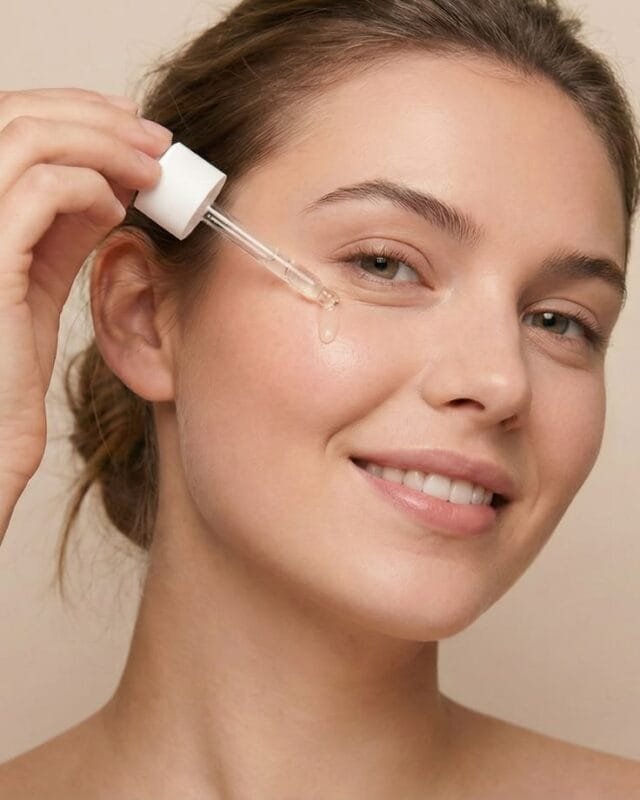
The 24-Hour Shield: Prevention is Your Best Anti-Aging Investment
Protecting your skin from glycation doesn’t require an overwhelming 10-step routine. It comes down to smart, daily consistency:
- In the Morning: Apply a weightless, antioxidant-rich serum to shield your collagen from daytime heat, UV-induced oxidative stress, and office AC dehydration. Always follow with a broad-spectrum sunscreen.
- In the Evening: Let biomimetic peptides and stabilizing botanicals work alongside your natural circadian repair cycle to encourage fresh collagen renewal while you sleep.
Stop letting sugar and heat dictate your skin’s elasticity. Switch to targeted, anti-glycation protection and keep your skin firm, bouncy, and radiant for years to come.
Rosiera serum India
Formulated specifically as a climate-smart solution, the Rosiera serum India lineup combines biomimetic peptides and anti-glycation botanicals to keep your skin plump, radiant, and youthful.