

When analyzing chronic hard water skin damage, the frustration usually begins with an unexpected move. You relocate to a thriving corporate hub like Bengaluru, Gurgaon, Mumbai, or Chennai. You maintain your meticulously curated skincare routine, investing in high-end active serums. Yet, within a few weeks, your skin rebels.
Your face feels uncomfortably tight immediately after washing, flaky patches appear out of nowhere, and you are suddenly fighting persistent, dull texturing and sudden breakouts.
This is the hidden daily crisis facing millions of urban professionals across the Indian subcontinent. You haven’t chosen the wrong products, and your hormones haven’t suddenly fluctuated. Instead, your skin barrier is locked in a losing battle with your bathroom tap.
To reclaim a radiant complexion, we have to look past generic marketing hype and dive into the exact biochemistry of how high-TDS urban water compromises your skin matrix—and how to structurally break the blockade.
🏗️ The Molecular Chemistry: Calcium, Magnesium, and the Acid Mantle
To understand why Indian hard water hair and skin issues are so notoriously difficult to treat, we must examine the physiological shield of human skin: the acid mantle.
Healthy human skin is naturally acidic, maintaining a delicate pH balance of approximately 5.5. This acidity is your skin’s first line of defense, keeping the lipid bilayer tightly organized, sealing in deep cellular moisture, and repelling harmful environmental pathogens.
Metropolitan groundwater and high-TDS supply lines, however, are heavily saturated with dissolved minerals—primarily divalent cations of calcium and magnesium. This mineral density creates a severe two-pronged attack on your skin cells:
1. The Soap Scum Saponification
When you wash your face with hard water, the heavy calcium and magnesium ions in hard water undergo a chemical reaction with the natural fatty acids in your cleansers and your skin’s surface lipids. Instead of rinsing away cleanly, they precipitate into an insoluble, chalky mineral salt layer.
In cosmetic science, this is essentially a microscopic layer of “soap scum.” It forms an aggressive, invisible film that clings tightly to your skin matrix, refusing to dissolve with normal rinsing.
2. The Alkaline Shift
Because these mineral ions are highly alkaline, every single wash forces your skin’s pH to spike far above its healthy 5.5 threshold. This sudden shift destabilizes the enzymatic processes responsible for producing ceramides and essential lipids.
🌍 A Borderless Crisis: From Tier 1 High-Rises to Village Aquifers
It is a common misconception that hard water is a luxury apartment problem unique to corporate professionals in newly developed Tier 1 sectors. The reality is far more pervasive. High TDS (Total Dissolved Solids) water is a borderless crisis in the Indian landscape, heavily impacting Tier 1 cities, Tier 3 industrial towns, and even rural villages alike.
Whether it is a luxury high-rise in Bengaluru drawing from over-tapped commercial borewells, a Tier 3 municipality relying on deep limestone groundwater, or a village community using unfiltered local tube wells, the geological reality remains the same. Much of India’s geographic terrain is naturally rich in dense mineral beds. As groundwater levels deplete nationwide, the water reaching our bathrooms—regardless of our pin code—becomes increasingly concentrated with heavy sediments, making hard water skin damage a shared national struggle.
🛑 The Product Blockade: Why Your Premium Serums Are Failing
This microscopic mineral crust does more than just cause surface dryness—it acts as a physical shield that completely disrupts your entire topical skincare routine.
When you apply an active serum over a skin barrier that has been compromised by high TDS levels skin barrier damage, the active molecules face an impassable obstacle. The molecular “soap scum” film alters the surface tension of your skin, causing your water-based treatments, antioxidants, and humectants to sit awkwardly on top of the mineral layer.
Instead of cleanly absorbing deep into your dermis where they can communicate with your cells, these premium active ingredients end up trapped on the surface. Exposed to the open air and urban humidity, they prematurely oxidize. This can cause targeted active ingredients to become unstable, leading to a localized alkaline water breakout, clogged pores, and a patchy, dull complexion.
This surface blockade traps impurities underneath, triggering the exact same defensive overproduction of sebum we uncovered in our deep dive on Dullness vs. Glow: The Truth About Sebum and Inhttps://www.linkedin.com/posts/rosiera_dullness-vs-glow-the-sebum-trap-activity-7464954673419128832-4DUC?utm_source=share&utm_medium=member_desktop&rcm=ACoAADBMq_kBWFIK7r7zTszNUUZDQQNtGwJeRP8dian Skin.
🔬 The Biotechnical Solution: How to Break the Mineral Loop
To successfully reverse hard water skin damage, traditional skincare advice will tell you to install expensive whole-house chelating filters or wash your face exclusively with bottled water. While helpful, these solutions are often impractical for busy professionals or those renting across Tier 1 and Tier 3 cities.
From a cosmetic formulation standpoint, the true solution lies in changing how you treat your skin after it leaves the tap. You do not need harsh, heavy clarifying washes that further strip your lipids. Instead, your routine must focus on smart molecular chelation, pH restoration, and weightless barrier repair.
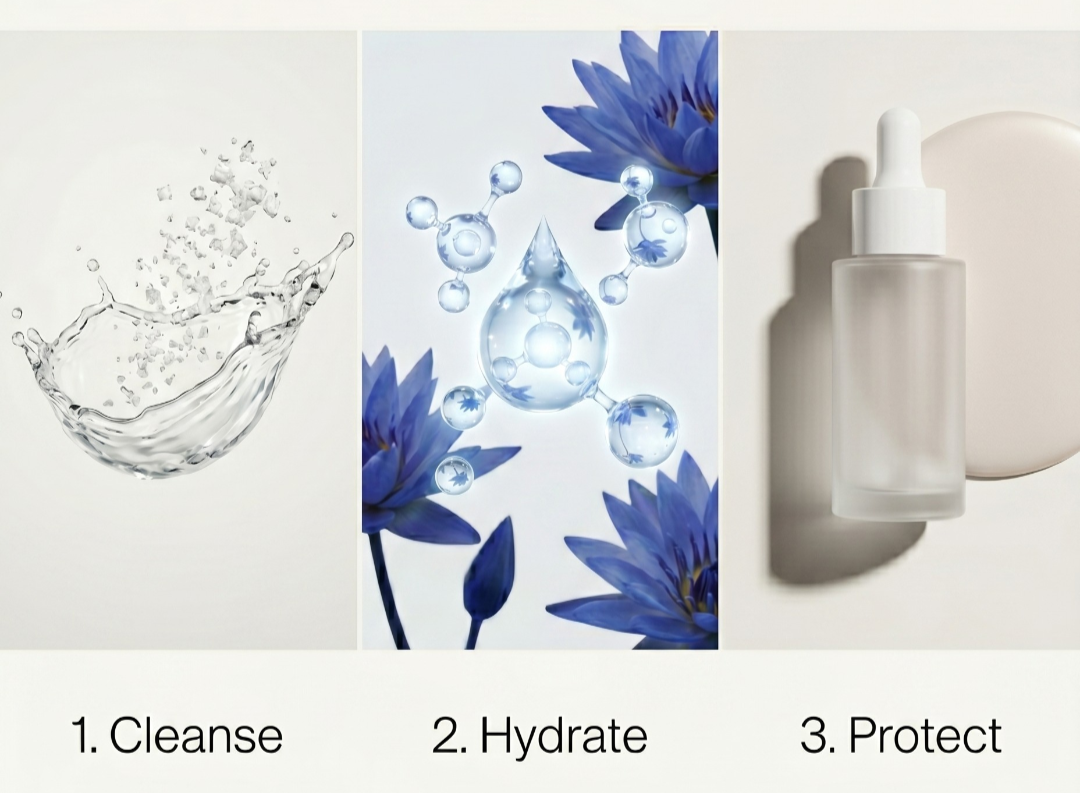
1. Neutralize with Low-pH, Non-Stripping Cleansing
Since hard water forces your skin into an aggressive alkaline state, your immediate priority post-wash is to gently nudge your pH back down to its optimal 5.5 zone. Look for clean, water-based gel cleansers that utilize mild surfactants rather than high-foaming sulfates. Sulfates bind aggressively to calcium and magnesium molecules, worsening the “soap scum” film on your pores. A low-pH, surfactant-intelligent wash ensures minerals are lifted away without stripping away your remaining natural lipid bilayers.
2. Introduce Nature’s Molecular Dampeners
When calcium crystals dry on the skin, they trigger micro-inflammation at a cellular level, alerting your melanocytes and sebaceous glands. To calm this panic, your formulation strategy must include smart botanical adaptogens.
Ingredients like Blue Lotus Extract function as incredible biological dampeners. Rich in natural phytosterols and bio-flavonoids, Blue Lotus helps soothe the underlying irritation caused by high TDS levels skin barrier friction, preventing your skin from sending emergency panic signals that lead to an alkaline water breakout.
When designing biotechnology-backed skincare for hard water, the goal must shift from heavy surface oils to deep cellular saturation..
3. Deploy Multi-Molecular, Climate-Adaptive Hydration
Because the mineral crust alters surface tension, you must completely avoid heavy, occlusive creams engineered for cold Western climates. These thick, oil-heavy layers will simply trap the mineral sediments against your skin, suffocating your pores.
Instead, opt for weightless, multi-molecular water binders. Flooding the skin with clean, cross-linked Hyaluronic Acid and a structured Peptide Complex allows moisture to bypass the mineral blockade entirely. These smaller, agile molecules slip between the mineral deposits, plumping your cells with water from within and structurally rebuilding your cracked lipid architecture.
🛠️ The Hard Water Recovery Ritual
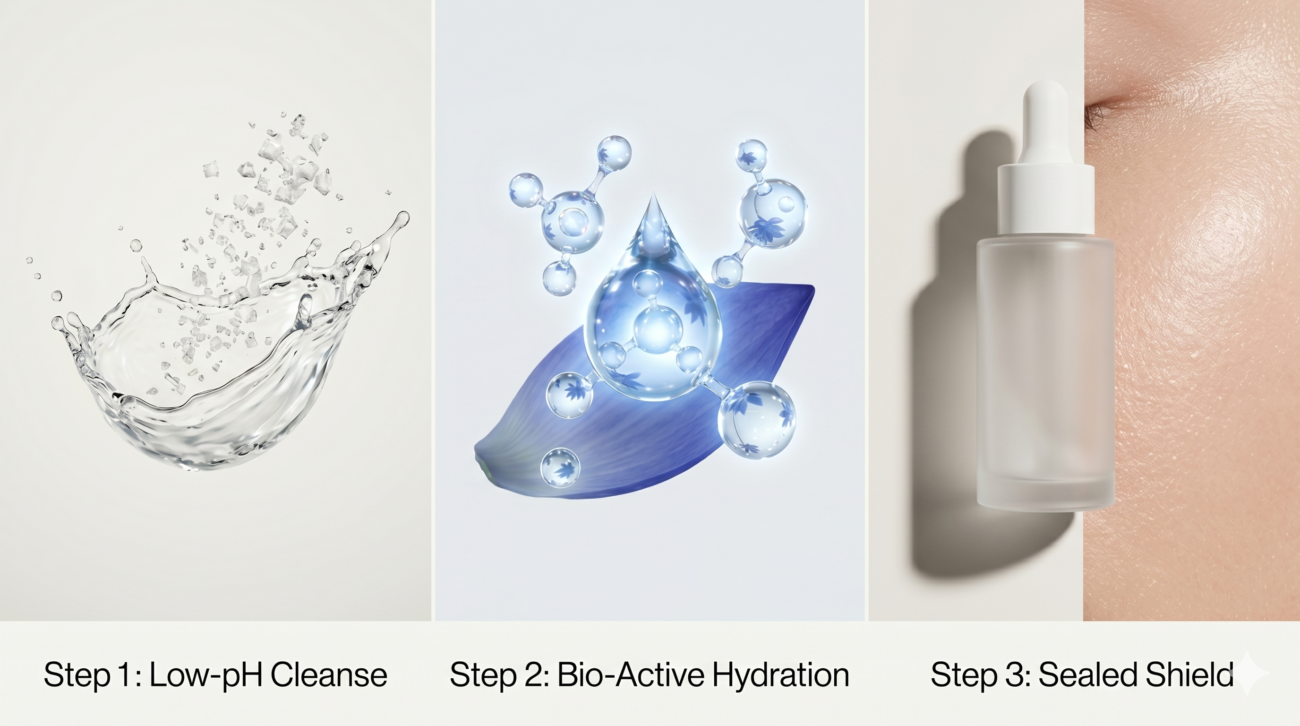
If your skin is currently battling groundwater minerals, transition your daily routine into a climate-smart, barrier-first asset:
- The Reset: Immediately after rinsing your face with tap water, do not let it air-dry. Air-drying allows the calcium and magnesium to instantly crystallize on your skin matrix. Mist your face immediately with a pure, distilled botanical hydrosol (like Rose Water) or a low-pH toner to instantly disrupt the alkaline shift.
- The Structural Rebuild: Apply a high-purity, water-based serum packed with Niacinamide and Peptides. Niacinamide works beautifully here to reinforce the pore walls and regulate the excess oil production triggered by mineral irritation, while peptides act as the molecular architects repairing the brittle cell walls.
- The Climate Seal: Lock everything in with a weightless, non-comedogenic fluid containing Squalane and Ceramides. This mimics your natural sebum without the sticky, heavy finish—giving you a true, healthy glow rather than an afternoon mineral shine.
🌍 Conclusion: Reclaiming Your Glow From the Tap
Hard water skin damage is a quiet, nationwide epidemic in India, but it doesn’t have to dictate the health of your skin barrier. Once you understand that your afternoon breakouts and morning tightness are simply a chemical reaction between alkaline minerals and your acid mantle, you can stop fighting your skin with harsh scrubs.
By stepping away from heavy, suffocating creams and embracing weightless, biotechnology-backed hydration, you can break the mineral blockade for good. Treat your barrier with cellular intelligence, restore its natural 5.5 pH, and unlock a resilient, lit-from-within radiance that no amount of hard water can wash away.
Rebuilding a compromised matrix requires targeted, climate-smart skin barrier repair in India‘s unique environmental conditions